
Explain Microservices to Beginners using Stranger Things

NO SPOILERS AHEAD
Today the Stranger Things finale was released. While watching Stranger Things, I came up with the idea of explaining microservices to beginners using the Stranger Things analogy.
I don’t know how good or bad this idea is. But no worries, hated or loved Reddit comments will answer this question shortly. So let’s jump into Upside Down.
What is Microservice?
Microservices architecture means building a system as a collection of small, independent services, each responsible for one specific capability, communicating over the network.
Lets’s understand using Stranger Things
Hawkins
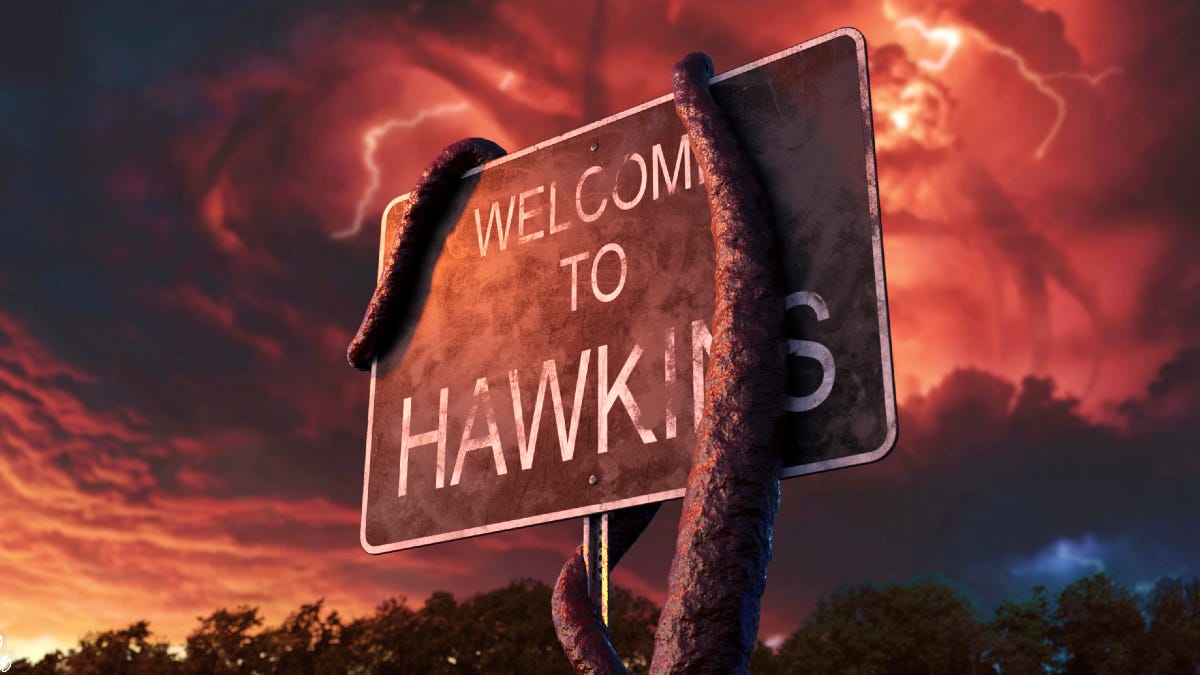
Think of Hawkins town as your entire software system. The goal of Hawkins is to function properly as a town:
Keep people safe
Investigate weird stuff
Fight monsters
Maintain normal life
Similarly your application have following goals:
Authenticates users
Processes payments
Sends notifications
Stores data
Hawkins doesn’t rely on one giant person to do everything. Instead, different characters handle different responsibilities. This is called microservices architecture.
Characters as Microservices
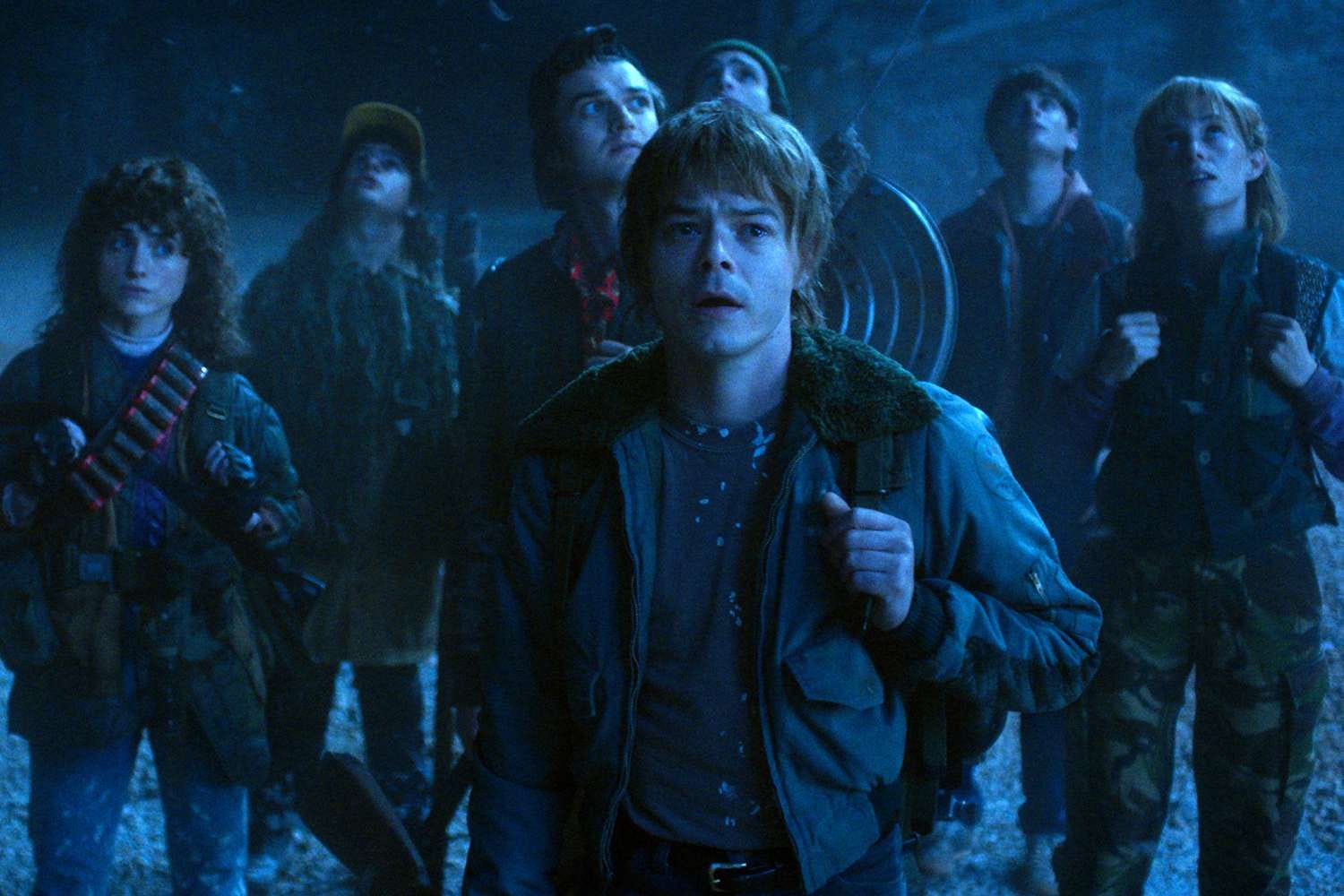
Each character performs their own responsibility so we can write them in terms of microservices.
Eleven — Threat / Defense Service
Responsible for fighting monsters and handling direct threats.Dustin — Analytics / Data Processing Service
Handles scientific analysis, gadgets, and figuring out what’s going on.Hopper — Auth / Security Service
Maintains law, order, and access control.Joyce — Notification / Alert Service
Responsible for communication and warnings.Steve — Support / Ops Service
Handles logistics, protection, and operational tasks.Murray — Investigation / Diagnostics Service
Focuses on investigation, pattern-finding, and hidden information.
Each one:
Works independently
Has its own skills (logic, data, rules)
Can be replaced or improved without rewriting the others
That’s exactly what microservices are.
Communication = APIs

When we have different components (microservices), we need a way to communicate between them. In Stranger Things, characters don’t share brains — they communicate by:
Walkie-talkies
Phone calls
Face-to-face messages
That’s like:
HTTP APIs
gRPC
Message queues
Example:
Dustin finds a signal → calls Hopper → Hopper mobilizes police → Joyce warns people.
Example in terms of microservices:
Auth Service detect a login → calls location service for login location → Notification Service to alerts user.
The Upside Down = external systems / failures

Upside Down brings threats to the world. The Upside Down represents:
External dependencies
Unpredictable failures
Chaos (network issues, outages, bugs, attacks)
Microservices isolate damage:
If Eleven is injured, Dustin can still work.
If Notification Service is down, Payments still work.
That’s fault isolation — a huge microservices benefit.
Scaling = adding more characters

When things get worse, Hawkins doesn’t make Eleven fight harder — they add more people:
Max joins
Erica joins
More agents come
That’s horizontal scaling.
If traffic increases on Payments:
Deploy more instances of Payment Service
No need to scale the whole system.
Independent deployments

Eleven can train without shutting down Hawkins.
Similarly:
You can update Notification Service
Without redeploying Payments or Auth
This is one of the biggest microservice advantages.
What would monolith be in Stranger Things?
A monolith would be:
One single superhero who:
Investigates
Fights monsters
Runs the police
Communicates alerts
Maintains infrastructure
If that person falls — Hawkins collapses.
That’s:
Hard to change
Hard to scale
High risk
So this is how you can understand microservices using the Stranger Things analogy.
My Other Posts
🔒 Why subscribe?
I’m documenting my journey of learning how computers and systems actually work.
If you want:
to write more efficient backend systems
to understand why performance breaks (not just how to fix it)
to think beyond frameworks and APIs
then this newsletter is for you.
👉 Subscribe to get practical explanations, book breakdowns, and real engineering insights — without hype or shallow tutorials.
(No spam. Unsubscribe anytime.)
Never thought I'll read "stranger things" and "Microservices" in the same sentence.
But nicely done.